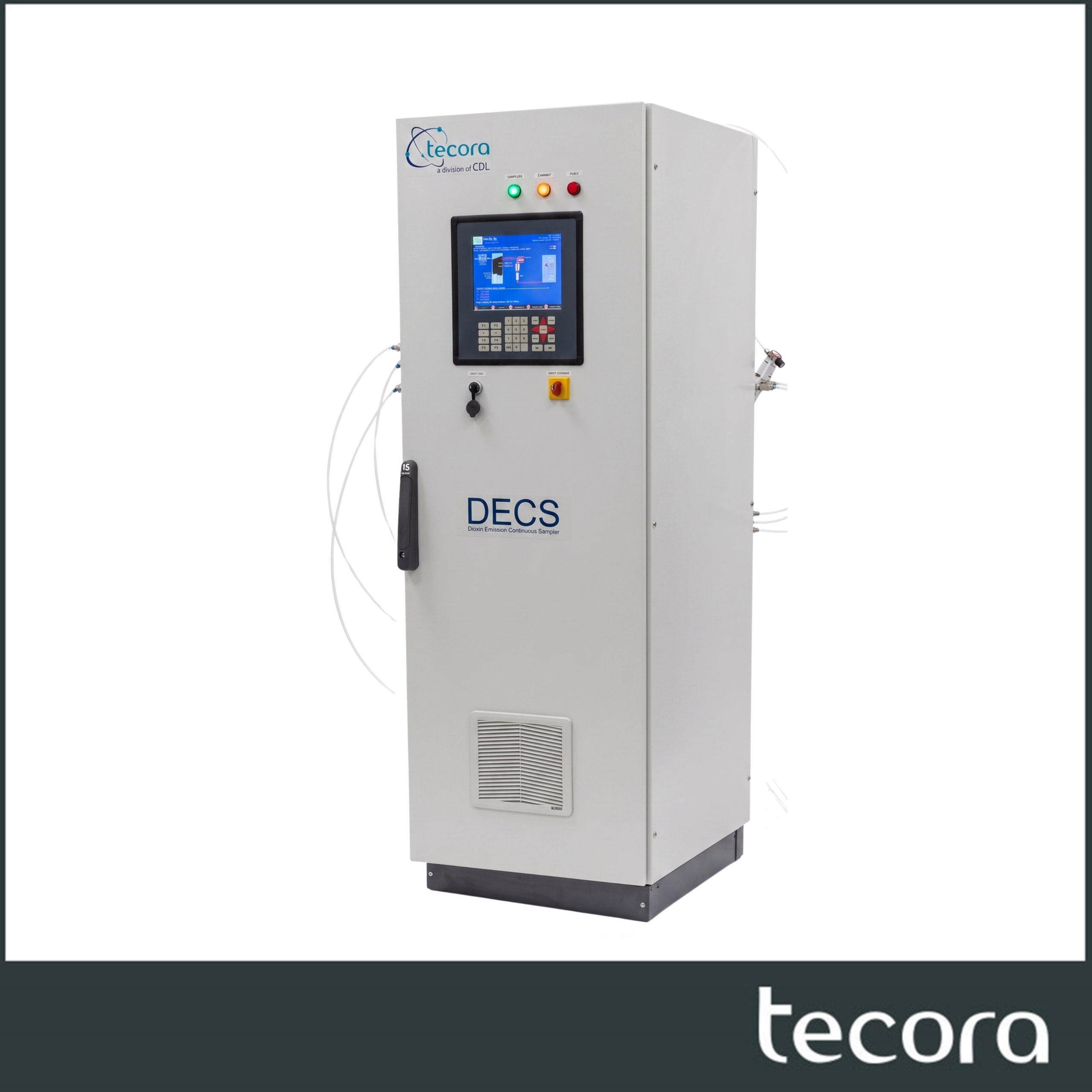
Dioxins Emission Continuous sampler DECS
General Description:
DECS is the solution offered by CDL-Tecora for the continuous emission sampling of Dioxins, Furans (PCDD/PCDF),PCB and other POPs. According to EN 1948 and USEPA M23 standard, DECS adopts the filter/condenser method with adsorbing trap on wet gas. The system is permanently installed on stack for continuous sampling from 6 hours up to 6 weeks.
DECS is MCERTS Certified for velocity from 2 to 35m/sec.
Technical Description:
Micro pollutants sampler (PCDD/Fs, PCB, PAH) with Filter/Condenser method and adsorbing trap on wet gas in accordance with EN 1948 and USEPA M23 methods;
Up to 4 Sampling Units can be managed by a single Control Unit
Distance between Sampling and Control Units up to 100mt;
Fully automated sampling: no operator presence required;
Automatic preparation and cleaning;
Easy upgrade using the heated probe with outstack heated filter for solid phase and side sampling for heavy metals, mercury and acids.
A dedicated solution for the continuous sampling of dioxins and furans
Dioxins and furans are among the most monitored pollutants in combustion, incineration and energy recovery plants. Their control requires rigorous sampling methods capable of preserving the integrity of the sample throughout the measurement campaign.
The DECS has been designed to meet these constraints thanks to a permanent architecture installed directly on the chimney. This configuration makes it possible to carry out long-term sampling campaigns while limiting on-site interventions.
Key benefits
- Continuous monitoring up to 6 weeks
- Fully automated operation
- Automatic control of isokinetism
- MCERTS QAL1 Certification
- Compliance EN 1948 and USEPA Method 23
- Permanent installation on chimney
- Simplified maintenance
- Centralized management of several points of withdrawal
Compliance with international reference standards
In 1948 for dioxins and furans
The system applies the filter-condenser method associated with a wet gas adsorbent trap in accordance with the requirements of standard EN 1948 used for the determination of PCDD/PCDF in atmospheric emissions.
USEPA Method 23
The DECS also meets the requirements of the US USEPA Method 23 used for measuring persistent organic compounds in flue gases.
MCERTS Certification
The system is MCERTS certified based on requirements for automated isokinetic samplers and validation procedures for environmental monitoring systems.
High-performance picking technology
Simultaneous collection of the particulate and gaseous phases
The DECS ensures the recovery of pollutants present in the particles as well as in the gas phase without altering the composition of the collected flow.
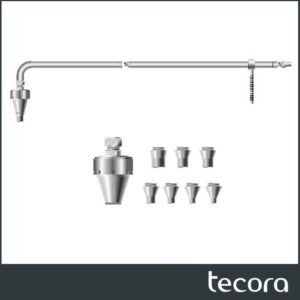
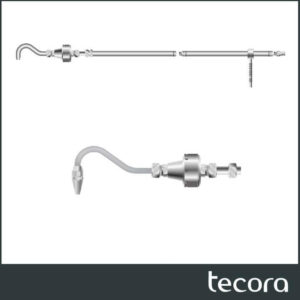
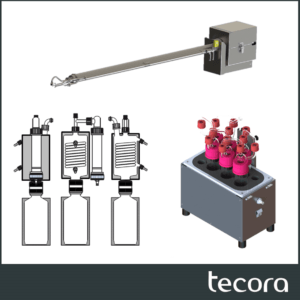
The sampling unit includes:
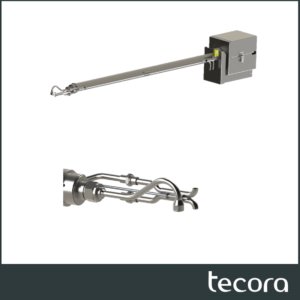
- a heated probe,
- a heated filter holder,
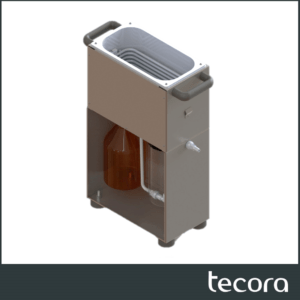
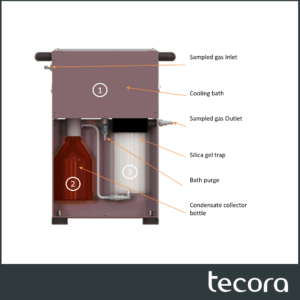
- a condensation system,
- an XAD-2 resin adsorbent trap,
- a Pitot tube for speed measurement.
This configuration ensures optimal representativeness of the sample throughout the entire measurement campaign.
Materials suitable for environmental applications
All elements in contact with the sampled gases are made of glass, titanium or materials compatible with the requirements of the reference methods.
Automatic control of isokinetism
Precision of the sampling
The respect of isokinetic conditions is an essential factor for the quality of results when measuring pollutants associated with particles.
The DECS incorporates a regulation system that allows:
- the automatic adjustment of flows,
- the monitoring of sampling parameters,
- management of operational variances,
- continuous monitoring of system performance.
Monitoring Critical Settings
The control unit ensures:
- temperature monitoring,
- the automatic leak tests,
- the calculation of the collected volumes,
- the recording of alarms,
- the generation of validation data.
Modular architecture for industrial plants
Sampling unit
Installed directly at the measuring point, the sampling unit remains in place between campaigns and can be put back into service at any time.
Its main advantages:
- no insertion or extraction of probes between the samples,
- quick replacement of the filter and the XAD-2 cartridge,
- design adapted to outdoor installations,
- immediate availability.
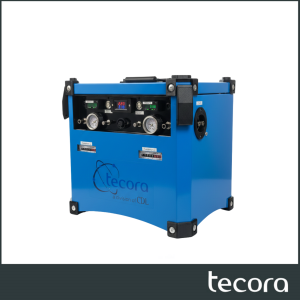
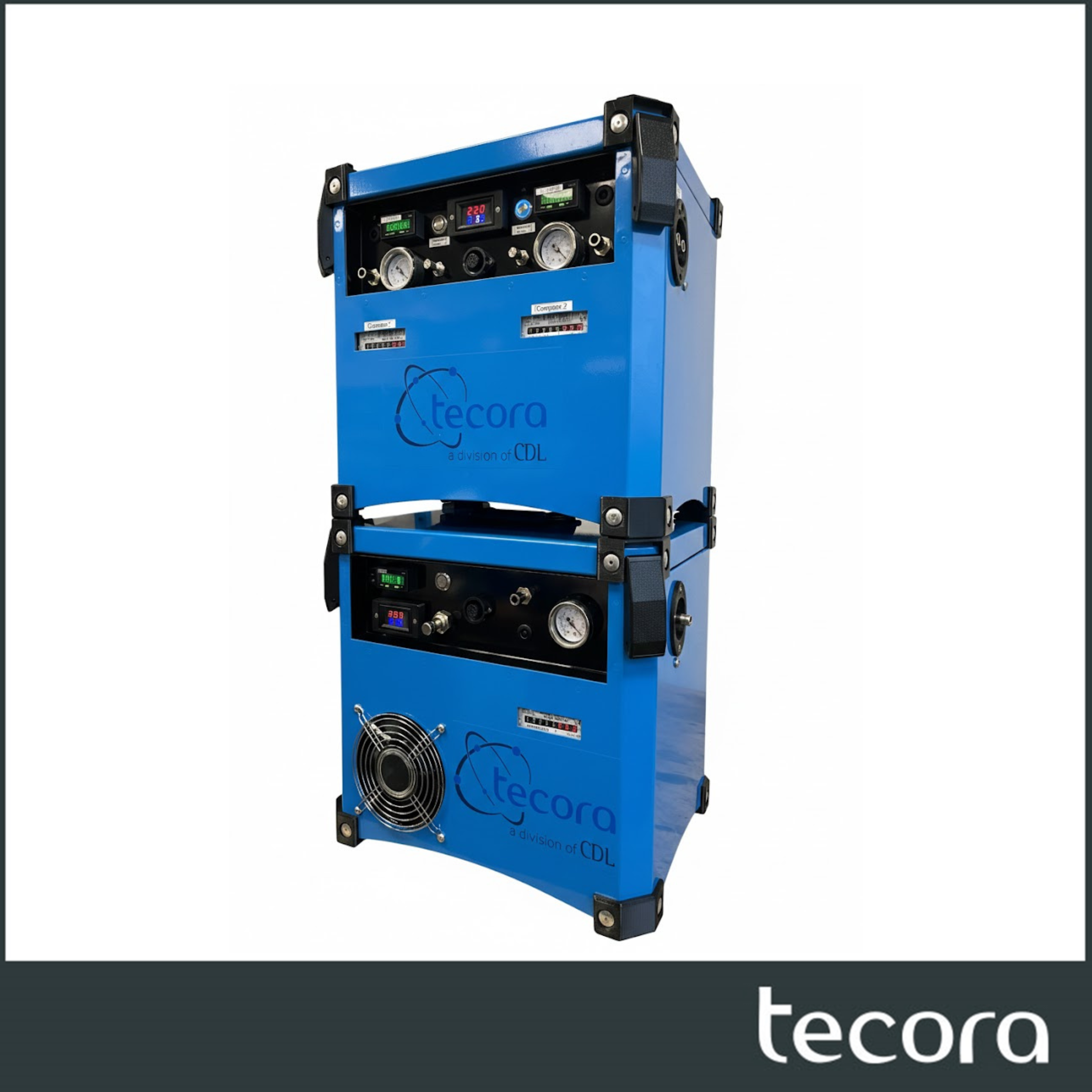
Control unit
The control unit centralizes all system functions.
It has in particular:
- a color graphic screen,
- an integrated data logger,
- a Modbus communication,
- an automatic start by process signal,
- an automatically generated withdrawal report.
A single control unit can manage up to four sampling units.
Adaptation to other regulated pollutants
Beyond dioxins and furans, the DECS can be configured to monitor other regulated substances through the integration of specific accessories.
Possible applications:
- PCB,
- mercury (Hg),
- heavy metals,
- hydrogen chloride (HCl),
- other persistent organic pollutants.
This flexibility makes it possible to optimize environmental campaigns and pool measurement equipment.
Industrial applications
Waste incineration plants
Biomass power plants
Thermal power stations
Cement plants
Energy recovery facilities
Chemical industries
Sites subject to regulatory oversight of POPs
Main technical characteristics
Picking Duration
6 hours to 6 weeks
Number of piloted picking units
Up to 4
Distance control unit / sampling unit
Up to 100 meters
Communication
Modbus
Power
220 VAC – 50 Hz
Air instrument
6 bar clean and without oil
Certification
MCERTS QAL1
Applicable standards
IN 1948 – USEPA Method 23
Why choose DECS?
The DECS combines regulatory compliance, advanced automation and industrial robustness to meet the requirements of operators facing persistent organic pollutant monitoring. Its permanent architecture, its MCERTS certification and its ability to carry out long-term campaigns make it a reference solution for the continuous sampling of dioxins and furans.
Toggle title
FAQ
Why carry out a continuous sampling of dioxins and furans?
Long campaigns provide a more accurate representation of actual emissions than one-off measurements taken over a few hours.
What is the difference between continuous sampling and one-off measurement?
Continuous sampling covers an extended period of plant operation and reduces the impact of process variations on results.
Is the system compliant with European requirements?
Yes, the DECS complies with the EN 1948 methods and has an MCERTS certification adapted to automatic isokinetic sampling systems.
Can other pollutants be monitored with the same system?
Yes, the system can be adapted for the control of mercury, PCBs, heavy metals or HCl.
+33 1 82 88 92 45 – commercial@tecora.com
| Marque | CDL-Tecora |
|---|